Summary
Discover what the winterline in mussoorie is, why this unusual horizon appears, when you are most likely to see it, and where to enjoy the phenomenon during a winter visit to Mussoorie.
What You’ll Learn
- What the winterline is and how it differs from a normal sunset.
- The simple science behind this unusual atmospheric phenomenon.
- When weather and light conditions are most suitable for seeing it.
- Where you can look for clear views of the winterline in Mussoorie.
- Simple tips for watching and photographing this unique winter sight.
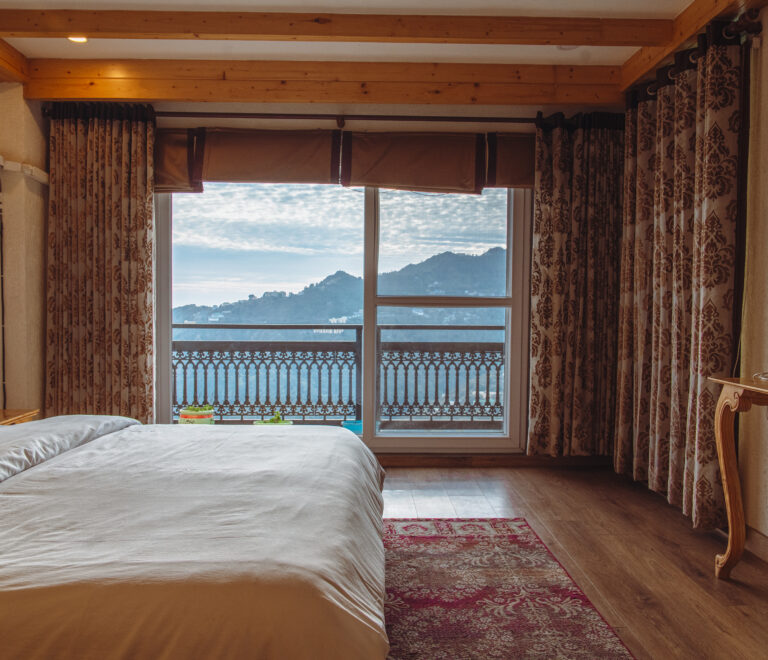
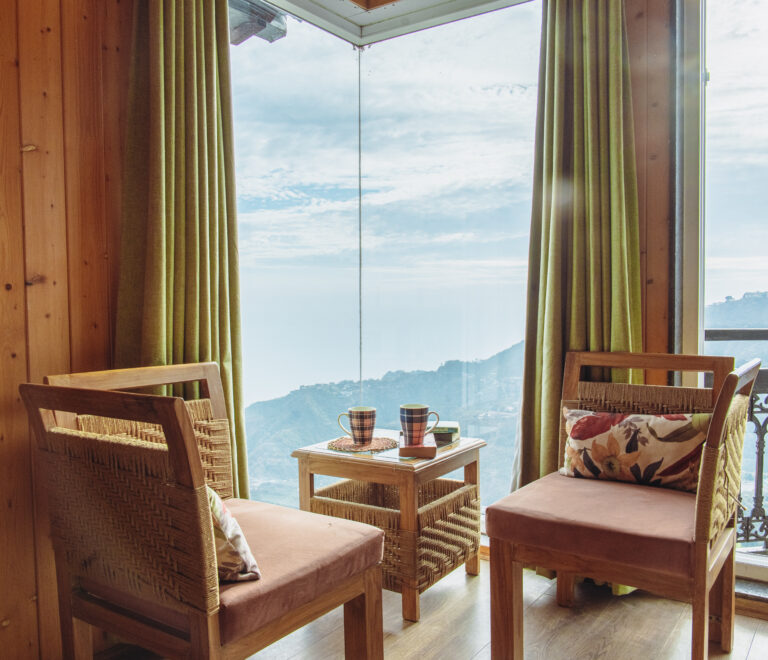
- How staying at a homestay in mussoorie mall road can make evening exploration more convenient.
Introduction
Mussoorie is known for its hills, old colonial buildings, pine and deodar forests, and beautiful mountain views. But during the colder months, the sky can sometimes show something that looks almost unreal — a clear line of light and colour sitting above the distant hills. This is known as the winterline in mussoorie.
For many visitors, the first sight of this unusual horizon can be confusing. It may look like a second sunset, a layer of clouds, or even a distant mountain range. In reality, it is a natural atmospheric phenomenon created by the way sunlight interacts with the air and the surrounding landscape.
The winter months are also a good time to notice this phenomenon because the air can feel clearer and the evenings become longer and colder. If you are planning a visit, staying somewhere with convenient access to the central parts of town can also make it easier to enjoy evening views. A homestay in mussoorie mall road can be a practical choice for travellers who want to explore the town without spending too much time travelling between places.
In this guide, we will look at what the winterline actually is, why it appears, when you are most likely to see it, and where you can look for a good view. The aim is simple — to help you understand one of Mussoorie’s most interesting natural sights rather than just taking a photograph of it.
What Exactly Is the Winterline Seen in Mussoorie?
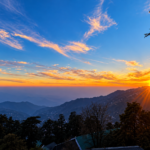
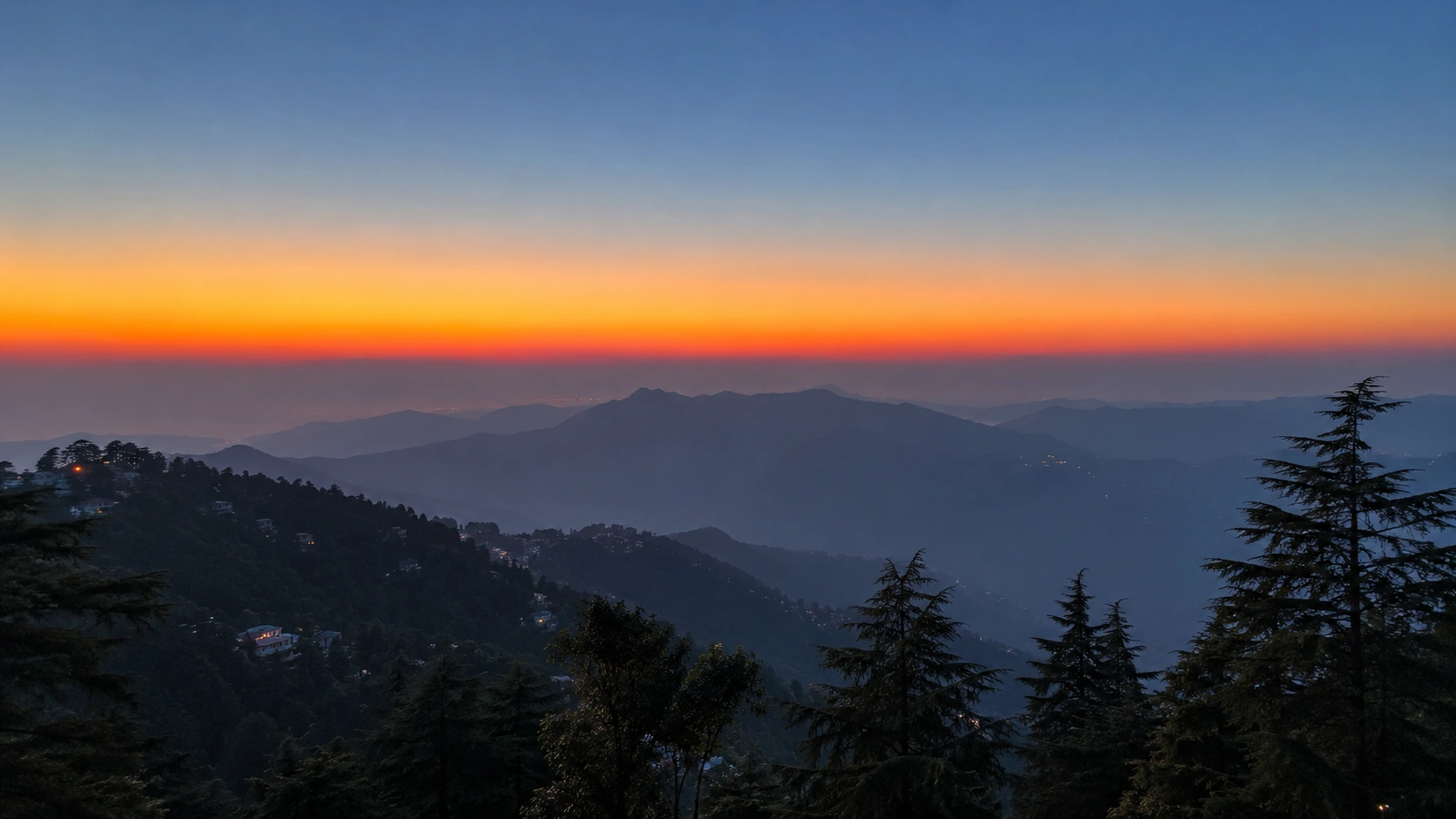
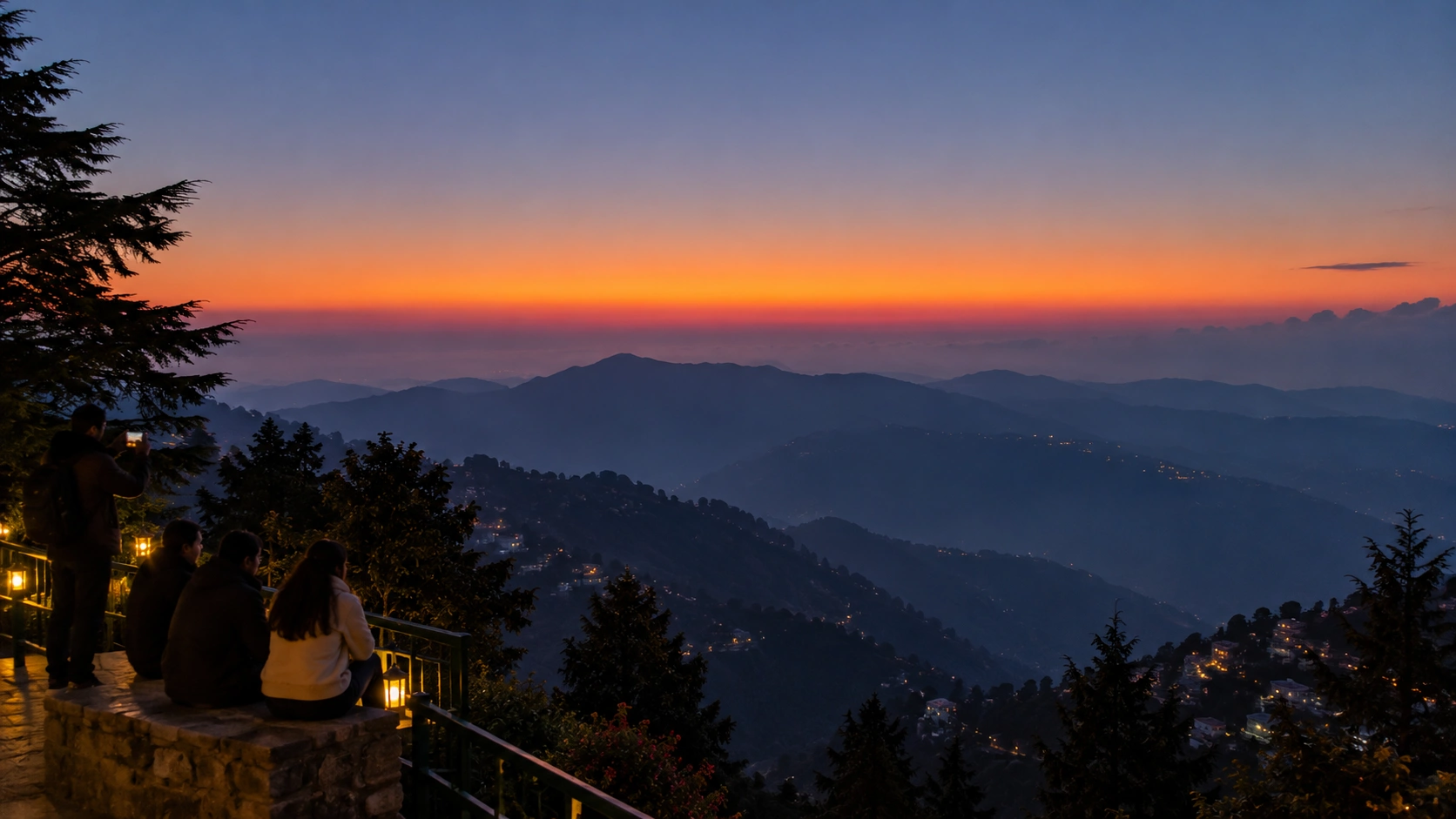
The winterline is a natural visual phenomenon that creates the appearance of a distinct horizontal line across the sky, usually around sunset. It can look like a second horizon floating above the actual horizon of the hills.
This is one reason people often find it so unusual when they first see it. The sky may have several layers of colour, with darker tones closer to the hills and a brighter or warmer band above them.
It is not a physical line in the atmosphere. There is no cloud, wall, or separate layer that you can actually reach. Instead, it is an optical effect caused by atmospheric conditions.
The name “winterline” comes from the fact that the phenomenon is commonly associated with the colder months. Hill stations such as Mussoorie can provide good conditions for observing it because of their elevation and open views toward the horizon.
Why Does It Look Like a Second Horizon?
The easiest way to understand the effect is to imagine several layers of light in the evening sky.
As the sun moves lower, sunlight passes through different parts of the atmosphere. Dust, moisture and tiny particles in the air affect the way that light is scattered. At the same time, the surrounding hills create a dark lower edge.
This combination can produce a sharp-looking boundary between different shades in the sky.
From a distance, it can look almost like another mountain range. However, the apparent line is created by light and atmospheric conditions rather than a separate physical object.
Is the Winterline the Same as a Sunset?
Not exactly.
A sunset is the event of the sun moving below the horizon. The winterline is an atmospheric optical effect that can become visible around the same period.
This means you can sometimes enjoy both at the same time. The setting sun may create orange, pink or golden colours, while the winterline forms a noticeable band farther across the sky.
The exact appearance changes from one evening to another. Some days may show a strong and clearly defined line, while on other days the effect may be faint.
That changing appearance is part of what makes the winterline in mussoorie interesting. You cannot expect it to look exactly the same every time.
Why Does the Winterline Appear Above the Hills?
The science behind the winterline is connected to the way sunlight travels through the atmosphere.
When the sun is low on the horizon, its light has to travel through a greater amount of atmosphere before reaching your eyes. During this journey, different wavelengths of light are scattered in different ways.
At the same time, atmospheric particles and moisture can influence the colours and brightness that you see.
The Role of Sunlight
Sunlight may look white during the day, but it contains many colours. When sunlight passes through the atmosphere, some colours scatter more strongly than others.
This becomes especially noticeable around sunrise and sunset because the light travels through a longer atmospheric path.
That is why the sky can change from blue to yellow, orange, pink and red as the sun gets lower.
The winterline is connected to these changes in evening light, but the surrounding landscape and atmospheric layers also play an important role.
Why Winter Conditions Can Make It Easier to Notice
Winter does not automatically guarantee a visible winterline. However, colder and drier conditions can sometimes provide a clearer atmosphere.
Mussoorie’s elevation also gives visitors wide views across the surrounding hills. When the horizon is open and visibility is good, subtle changes in the sky are easier to notice.
This is also why the effect can disappear when clouds, thick mist or poor visibility cover the distant horizon.
The winterline in mussoorie should therefore be treated as a natural sight that depends on the right combination of light, atmosphere and visibility rather than something that appears every evening.
Why Does the Colour Change?
The colours can vary depending on the conditions.
You may notice:
- Soft yellow and golden tones
- Orange and reddish shades
- Pink or purple bands
- Darker blue-grey areas
- A strong contrast between the hills and the sky
The amount of moisture and dust in the atmosphere, the position of the sun, and the condition of the sky can all influence what you see.
This is why two evenings in the same location can look completely different.
If you are planning to photograph the phenomenon, patience can be more useful than trying to predict an exact colour. Stay for a while and watch how the sky changes.
When Is the Winterline Most Visible in Mussoorie?
The winterline is generally associated with the colder part of the year, particularly around the months when evenings become crisp and the sky can offer good visibility.
However, there is no fixed date or guaranteed time when it will appear.
Weather conditions matter a lot. A cloudy or hazy evening may hide the effect completely, while a clearer evening can make the line much easier to notice.
The Best Part of the Day to Watch
The most useful time to look is around sunset and during the short period after the sun has gone below the horizon.
Do not leave immediately after sunset.
The colours of the sky can continue changing for several minutes, and the atmospheric contrast may become easier to notice after the direct sunlight has disappeared.
A simple approach is to reach your chosen viewpoint a little before sunset, find an unobstructed direction, and stay there for some time.
What Weather Conditions Help?
Clear visibility is one of the most important factors.
A few conditions that can improve your chances include:
- A relatively clear evening sky
- Good visibility across the hills
- Less dense cloud cover
- A visible western or open horizon
- Calm conditions that allow the colours to remain clear
Heavy clouds do not necessarily mean the evening will be unattractive, but they can make the winterline difficult to see.
Fog can also change the experience completely. Instead of a clear horizon, you may get a soft and misty view.
Is Winterline Guaranteed During Winter?
No.
This is important for anyone planning a trip specifically to see it.
Winter simply offers a suitable period for observing the phenomenon. It does not mean that the line will appear every evening.
Instead of making it the only purpose of your visit, treat it as something extra that you may get to experience during an evening walk or viewpoint visit.
For travellers staying close to the central town, a homestay in mussoorie mall road can also make this easier because you can return comfortably after spending the evening outside.
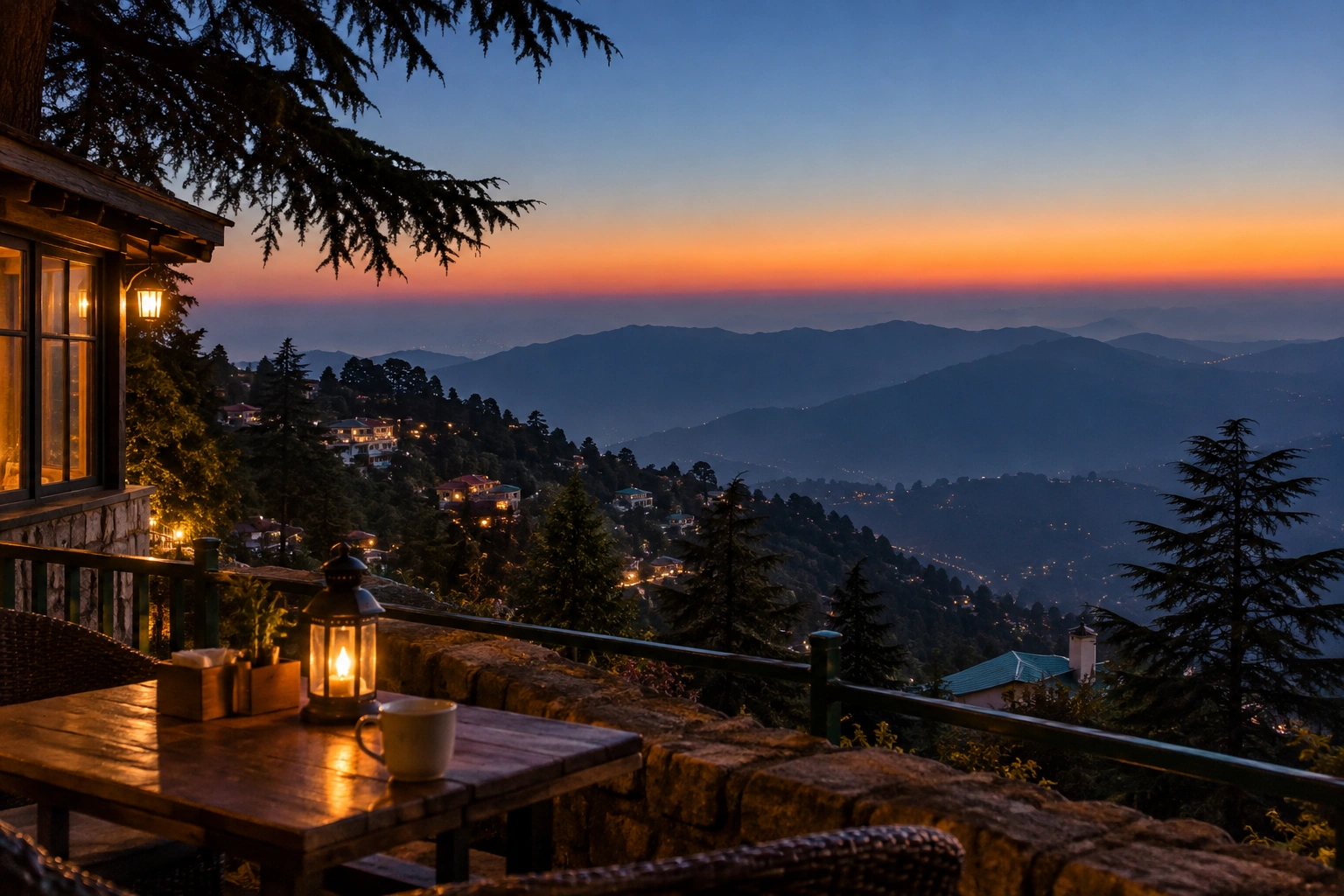
Where Can You Get a Better View of the Winterline?
Finding a good view is less about a single “perfect spot” and more about having an open view of the horizon.
The surrounding hills should not completely block the sky, and you should have enough space to observe the changing colours.
Open Viewpoints
Higher and more open areas can be useful because they give you a wider view of the sky.
Places around Mussoorie with open mountain views may offer good opportunities, especially when the evening is clear.
The important thing is to check the direction of the sunset and choose a location where buildings or dense trees do not block your view.
Landour and Other Quiet Areas
Some quieter parts of Mussoorie and Landour can provide a more relaxed setting for watching the evening sky.
Instead of looking for a crowded tourist point, you can choose a peaceful area with a broad view and simply spend some time observing the horizon.
The experience is often better when you are not rushing from one attraction to another.
Rooftops, Balconies and Open Spaces
You do not always need to travel far to notice the winterline.
A rooftop, balcony or open terrace with a clear view can sometimes provide an equally enjoyable experience.
This is especially useful for visitors who prefer slow evenings. After a day of sightseeing, you can simply sit outside and watch the sky change.
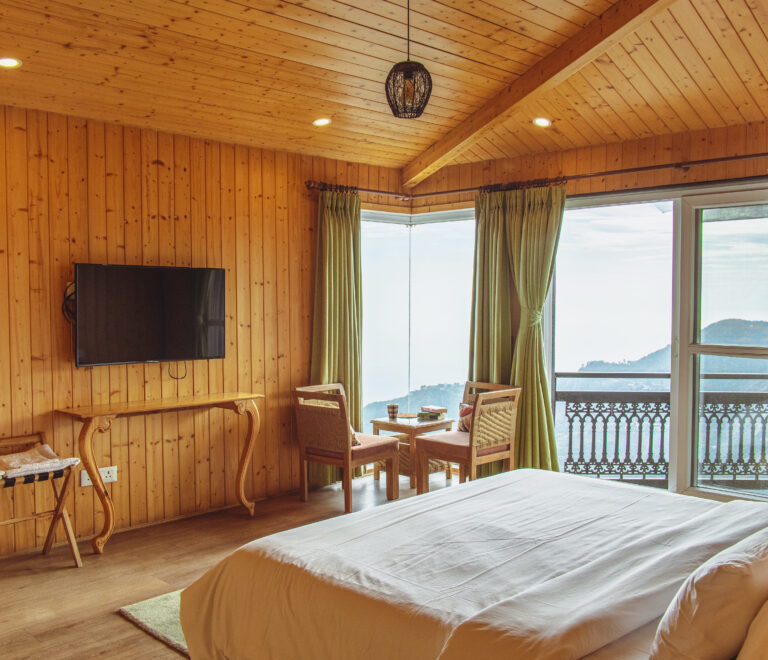
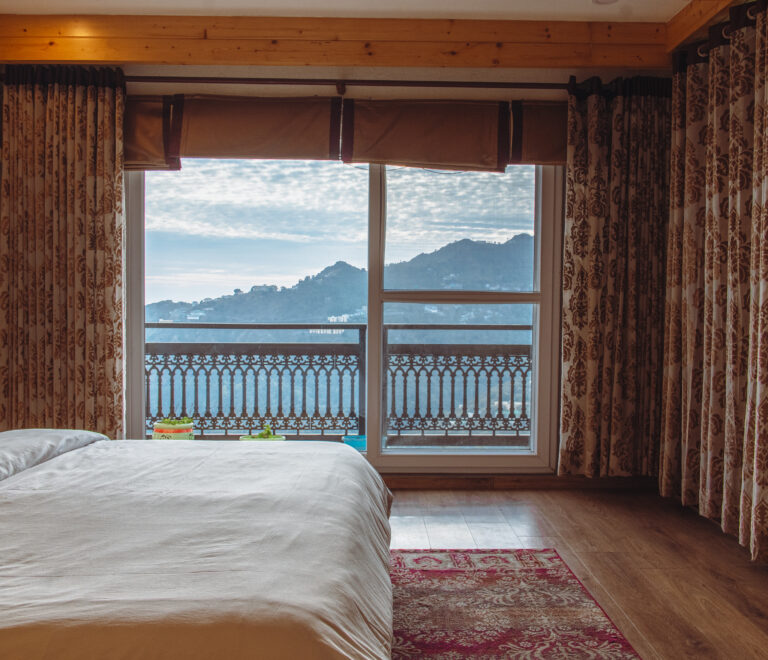
For travellers who want to combine easy town access with a comfortable base, a homestay in mussoorie mall road can make evening plans simpler. You can explore the town, look for a suitable viewpoint and return without making the evening feel like another full-day excursion.
A Few Simple Viewing Tips
If you want to improve your chances of seeing the phenomenon, keep these points in mind:
- Check the evening weather before heading out.
- Look for an open view toward the sunset.
- Reach your viewpoint before sunset.
- Stay for at least a little while after sunset.
- Avoid places where tall buildings or trees block the horizon.
- Carry a light jacket because winter evenings can become cold quickly.
- Keep your phone or camera ready, but spend some time enjoying the view without looking through the screen.
The best photographs often come when the sky is clear enough to show the contrast between the hills and the coloured horizon.
Why the Winterline Is One of Mussoorie’s Most Fascinating Natural Sights
The winterline is interesting because it shows how much can happen in the sky without any dramatic event taking place.
There is no snowfall, festival or major attraction involved. It is simply a combination of sunlight, atmosphere, elevation and landscape coming together at the right time.
That makes it different from many of Mussoorie’s famous sightseeing experiences.
You do not need an expensive activity or a long journey to enjoy it. Sometimes all you need is an open view, a clear evening and a little patience.
For visitors, it can also change the way they experience the town. Instead of rushing from one attraction to another, you start paying attention to smaller details — the changing light on the hills, the temperature after sunset, the colours above the horizon and the quiet atmosphere of the evening.
If you are staying near the centre, a homestay in mussoorie mall road can work well as a base for this kind of relaxed exploration. You can spend the day discovering Mussoorie and keep the evening free for views, walks and the changing sky.
The best part is that there is no guarantee of exactly what you will see. Some evenings may give you a strong horizontal band of colour, while others may simply bring a beautiful sunset over the hills.
That unpredictability is what makes the experience feel natural rather than planned.
A homestay in mussoorie mall road can also be useful for travellers who want to keep their evening flexible. Instead of travelling long distances after sunset, you can return to your stay, enjoy a warm drink and let the evening continue at a slower pace.
And if you are lucky enough to see the phenomenon clearly, the memory can become one of those small moments that stays with you long after the trip.
Conclusion
The winterline in mussoorie is a beautiful natural phenomenon that adds something special to the town’s winter evenings. With the right weather and a clear view, you may get to see this unusual horizon while enjoying the peaceful mountain surroundings.
If you are planning to explore Mussoorie at a relaxed pace, choosing a homestay in mussoorie mall road can also make it easier to enjoy evening walks, scenic views, and return comfortably after sunset. Sometimes, it is these simple moments that make a winter trip to Mussoorie truly memorable.
People Also Ask
Is December a good time to visit Mussoorie?
Yes, December is a popular time for a winter trip, with cold weather, clear mountain views, festive activities and a chance of snowfall later in the month.
Does it snow in Mussoorie in December?
Snowfall is possible, particularly toward late December, but it is not guaranteed every year. Higher areas such as Landour and Lal Tibba can offer better chances during suitable weather.
What are the best things to do in Mussoorie in winter?
Visitors can explore Mall Road and Landour, enjoy viewpoints such as Gun Hill and Lal Tibba, take short hikes, visit local cafés and look for winterline or snowfall when conditions allow.
Which treks can you do near Mussoorie in winter?
George Everest, Benog Wildlife Sanctuary and other nearby forest and hill trails can be considered, but winter conditions should be checked before starting a trek.
What is Mussoorie famous for apart from the Winterline?
Mussoorie is known for its Himalayan views, colonial heritage, Landour, Lal Tibba, Gun Hill, Mall Road, waterfalls, forests and access to nearby trekking and nature areas.
Frequently Asked Questions
What is the winterline in Mussoorie?
It is a natural atmospheric optical phenomenon that creates the appearance of a horizontal line or second horizon across the evening sky.
Can you see the winterline every day in Mussoorie?
No. Its visibility depends on atmospheric conditions, weather, light and how clear the horizon is.
What is the best time to see the winterline?
It is generally worth watching around sunset and for some time afterwards, especially during the colder months.
Is the winterline caused by snowfall or clouds?
No. It is an atmospheric light effect. Clouds, fog and haze can affect how clearly you can see it, though.
Can I photograph the winterline with a phone?
Yes. A phone can capture it when the contrast is strong, although keeping the camera steady and choosing an open viewpoint can improve the result.